
Space heaters can add warmth to a single room or occupied area. Choosing one means comparing how it delivers heat, where it may be used and the controls you need—not just the purchase price.
This guide explains six common descriptions: fan, ceramic, oil-filled, infrared, propane and panel heaters. Some overlap: a ceramic heater may use a fan, and an infrared cabinet can also circulate warm air. The examples below show what those differences mean in practice.
Here’s a quick look at four electric options before the full comparison.
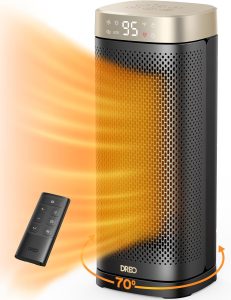
Dreo Solaris Slim H2 DR-HSH014 Ceramic Fan Heater
- 1500W maximum output with three heat levels
- Digital thermostat, ECO and fan-only modes
- 70-degree oscillation and remote control
- Dry indoor use; tip-over and overheat protection
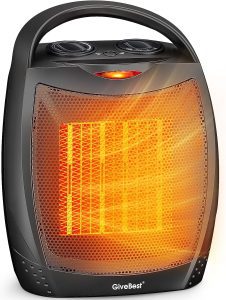
GiveBest PTC-SH905S Portable Ceramic Heater
- 750W and 1500W heat settings
- Fan-only mode and mechanical thermostat
- Compact carry-handle design
- Tip-over and overheat shutoffs
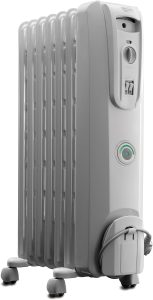
DeLonghi EW7707CM Oil-Filled Radiator
- 1500W maximum output; fanless operation
- Mechanical thermostat and selectable heat levels
- Sealed oil system; no oil refills
- ComforTemp preset and supplied wheels
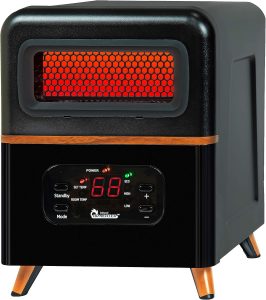
Dr. Infrared Heater DR-978
- Quartz and PTC elements with a blower
- 1500W maximum output and ECO mode
- Electronic thermostat, remote and 12-hour timer
- Dry indoor household use
How Space Heaters Work
A space heater provides local or supplemental heat, rather than distributing heat throughout a home like a central system. Whether one can warm a whole room depends on the room’s size, insulation, drafts and the heater’s output.
Electric models convert electrical energy into heat. Combustion heaters use fuels such as propane or natural gas and have different installation, ventilation and permitted-use requirements. In an electric oil-filled radiator, the sealed oil carries heat inside the unit; it is not burned as fuel and does not need routine refilling.
Heating only an occupied area can sometimes reduce overall costs if it lets you lower other heating, but adding a space heater on top of unchanged central heating increases energy use. Compare your actual power or fuel prices and operating time.
Categories of Space Heaters
The main heat-transfer methods are convection and radiation. Many practical heaters combine them.
Convection Space Heaters
Convection warms air, which circulates through the room. A fan can move that air; fanless models rely on natural circulation as warmer air rises. Keep the intake and outlet clear so the heater can work as intended.
Radiant Space Heaters
Radiant heat warms people and surfaces in its path. Line of sight matters: furniture can block that heat, so a crowded room is not automatically a better setting. Do not move objects closer than the manufacturer’s clearance permits.
Combination Space Heaters
Some heaters combine radiant elements with a fan or other convective surfaces. A blower can distribute warmth, but it does not create extra energy or guarantee a lower running cost than another heater with the same input.
Read: Pros and cons of hot water recirculating pumps
Which are the Best Types of Space Heaters?
Choose the type by its intended location and heating role. The first four examples are portable electric heaters for suitable dry indoor spaces; the propane option has separate restrictions, and the panel model also offers wall installation.
1. Fan Space Heaters
A fan heater blows air across an electric heating element. The element can be a wire or a ceramic PTC assembly, so “fan” describes air movement rather than a separate fuel or material.
Dreo Solaris Slim H2 DR-HSH014 Ceramic Fan Heater
- 1500W maximum output with three heat levels
- Digital thermostat, ECO and fan-only modes
- 70-degree oscillation and remote control
- Dry indoor use; tip-over and overheat protection
The Dreo Solaris Slim H2 DR-HSH014 is a ceramic fan example with up to 1500W of heat, three heat levels, ECO control and fan-only operation. Its digital thermostat, remote and 70-degree oscillation let you adjust the warmth and direction of airflow.
Tip-over and overheat protection are useful backups. They do not make the grille safe to touch or permit unattended use. Follow the DR-HSH014 instructions and keep airflow clear.
| The Pros and Cons of Fan Space Heaters | |
| Pros | Cons |
| Moves warm air promptly | Fan noise and airflow may be noticeable |
| Compact portable options are available | Requires suitable electrical power and clear airflow |
| Controls vary by model | Little stored heat after switching off |
Read: Hydronic versus standard electric baseboard heaters
2. Ceramic Space Heaters
Ceramic heaters use a ceramic PTC heating element. Many also have a fan, including the GiveBest model below. Ceramic construction alone does not establish that a heater is more efficient or safer than every other type.
GiveBest PTC-SH905S Portable Ceramic Heater
- 750W and 1500W heat settings
- Fan-only mode and mechanical thermostat
- Compact carry-handle design
- Tip-over and overheat shutoffs
The GiveBest PTC-SH905S uses rotary controls for its mechanical thermostat and operating mode. It offers 750W or 1500W heat and a fan-only setting; it has no digital temperature display or remote.
Its carry handle and compact housing make it easy to reposition when switched off and cool. Tip-over and overheat shutoffs do not remove the need to keep combustible items clear and plug it into a suitable wall outlet.
| The Pros and Cons of Ceramic Space Heaters | |
| Pros | Cons |
| Compact fan-assisted designs | Fan noise can be noticeable |
| Selectable heat settings on this GiveBest | Mechanical controls do not show a measured temperature |
| Useful for supplemental local warmth | Not a guarantee of adequate heat for a large room |
3. Oil Filled Space Heaters
An oil-filled electric radiator warms its sealed internal fluid, then releases heat through the metal body by both natural convection and radiation. The absence of a fan does not make it purely radiant.
DeLonghi EW7707CM Oil-Filled Radiator
- 1500W maximum output; fanless operation
- Mechanical thermostat and selectable heat levels
- Sealed oil system; no oil refills
- ComforTemp preset and supplied wheels
The DeLonghi EW7707CM has a mechanical thermostat, selectable heat levels and a ComforTemp preset. It has no remote or programmable timer. The supplied wheels help with repositioning after the heater has cooled.
Oil and metal store some heat and release it after switch-off, but that energy was supplied earlier. Stored warmth is not free additional heat. Allow time for warm-up and keep clear of the hot radiator surfaces.
| The Pros and Cons of Oil Filled Space Heaters | |
| Pros | Cons |
| No blower fan noise | Slower initial warm-up |
| Releases stored heat as it cools | Hot surfaces remain after switch-off |
| Sealed oil requires no refilling | Heavier than many small fan heaters |
Read: Arranging furniture around baseboard heaters
4. Infrared Space Heaters
Infrared describes radiant heat directed toward people and surfaces. Some units focus on spot heating; others combine infrared elements with warm-air circulation. Compare the actual construction rather than assuming all infrared models behave alike.
Dr. Infrared Heater DR-978
- Quartz and PTC elements with a blower
- 1500W maximum output and ECO mode
- Electronic thermostat, remote and 12-hour timer
- Dry indoor household use
The DR-978 combines quartz infrared and PTC elements with a blower. It provides up to 1500W, an electronic thermostat, ECO mode, a remote and a timer up to 12 hours. It is a hybrid household heater, not a fanless outdoor radiant unit.
It still needs a dry indoor location and the clearances in its manufacturer’s instructions. Neither infrared heating nor the protective shutoffs makes hot surfaces harmless or removes fire risks.
| The Pros and Cons of Infrared Space Heaters | |
| Pros | Cons |
| Radiant warmth can suit an occupied spot | Furniture may obstruct direct radiant heat |
| Hybrid models can also circulate warm air | Fan-equipped versions are not silent |
| Several control options on the DR-978 | No automatic running-cost advantage at equal input |
5. Propane Space Heaters
Propane heaters burn fuel and need a different assessment from electric heaters. Permitted locations, fresh-air ventilation, clearances and cylinder arrangements are model-specific. They are not automatically suitable for everyday indoor home heating.
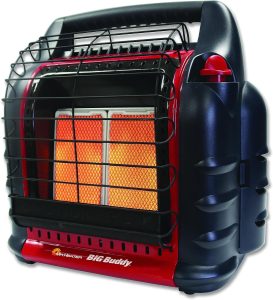
Mr. Heater F274800 MH18B Big Buddy
- 4,000 / 9,000 / 18,000 BTU propane heat
- Built-in fan on this F274800 variant
- Restricted indoor uses; ventilation required
- Low-oxygen and tip-over shutoffs
The red Mr. Heater F274800 MH18B Big Buddy offers 4,000, 9,000 and 18,000 BTU settings. This variant includes a fan, powered by four D batteries or the specified AC adapter, sold separately. It also has low-oxygen and tip-over shutoffs.
Its owner’s manual permits specified recreational, commercial and emergency indoor uses with ventilation. Emergency indoor use requires disposable 1 lb cylinders; two are required at the highest setting. Remote refillable-cylinder arrangements have separate restrictions and require the cylinder outdoors.
Never use it while sleeping or leave it unattended. Follow all ventilation and clearance instructions. Manufacturer restrictions exclude indoor use in Massachusetts and Canada and use in California dwellings. For routine supplemental warmth in a living room, consider an electric model intended for that use.
| The Pros and Cons of Propane Space Heaters | |
| Pros | Cons |
| Heat can be produced without household electricity | Ventilation and permitted-use restrictions |
| Portable fuel supply for approved situations | Fuel cylinders require correct handling and replacement |
| Several output settings on this model | Combustion and carbon-monoxide risks require precautions |
6. Panel Space Heaters
“Panel” describes the slim shape, not one universal heating method. Check whether a model uses convection, radiant surfaces or fans, and whether it permits floor use, wall mounting or both.
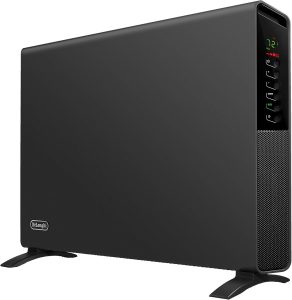
DeLonghi HCX9115E-6A AG Convection Panel Heater
- 1500W maximum output with optional fans
- Digital thermostat and three heat settings
- Timer up to 24 hours
- Supplied feet or installation per wall-mount instructions
The DeLonghi HCX9115E-6A AG is a convection panel heater with optional fans, three heat settings and a 1500W maximum. It includes a digital thermostat and a timer up to 24 hours. Use the supplied feet for floor placement or follow its wall-mounting instructions; it does not have rolling casters.
Wall mounting can free floor space, but does not make a heater safe to touch or eliminate combustible-material clearances. Keep it away from furnishings and follow the model’s installation instructions.
| The Pros and Cons of Panel Space Heaters | |
| Pros | Cons |
| Slim profile | Wall installation takes planning |
| Floor or wall use on this DeLonghi | Fixed installation is less portable |
| Thermostat, timer and optional fans | Still needs clear space around the heater |
Factors to Consider When Purchasing a Space Heater for Your Home
Treat a portable heater as supplemental heat unless a suitable heating plan says otherwise. Compare these practical factors before buying.
Space
Room heat loss matters more than a simple square-foot claim. A drafty room with high ceilings may need more heat than a well-insulated room of the same floor area. Also measure the space needed for safe placement.
Fuel Cost
Compare input, run time and your local tariff. A 1500W electric heater operating continuously for one hour uses 1.5 kWh; thermostat cycling changes its actual use. A lower setting produces less heat as well as using less power.
Safety
Follow the exact manual for the intended setting. Keep hot surfaces and air openings away from combustible items. Protective shutoffs are backups, and combustion models require ventilation and fuel precautions that do not apply in the same way to electric heaters.
Reliability
Consider access to the required power or fuel, replacement parts and manufacturer support. A portable heater should not be your only plan for maintaining suitable conditions during an outage or extreme weather.
Efficiency
Heat delivery and comfort differ between designs. A fan can move warmth quickly, while an oil-filled radiator releases stored heat more gradually. Neither effect alone proves lower energy consumption for the same room temperature.
Availability
Choose the exact model and voltage suitable for your location, and check its current availability and instructions. Similar-looking products can have different controls, accessories and permitted uses.
FAQs on Space Heaters
What Type of Heater is best for Indoors?
Choose a model intended for the indoor location and heating role. Ceramic fan heaters, oil-filled radiators and convection panels offer different controls and heat distribution; none is universally best. Combustion heaters have separate ventilation and permitted-use restrictions.
Which is Better Infrared or Space Heaters?
Infrared heaters are one type of space heater. Their radiant heat can suit an occupied spot, while fan or convection models distribute warmth differently. Infrared does not automatically mean lower energy bills, immunity to overheating or safety near combustible materials.
What’s the Difference Between Ceramic and Infrared Heaters?
Ceramic heaters use a PTC ceramic element and often a fan. Infrared heaters deliver radiant energy to people and surfaces in their path. Some products combine the two methods: the DR-978 has quartz and PTC elements plus a blower.
Do Space Heaters Increase Electric Bill?
Yes. Electric space heaters add electricity use. A 1500W heater running continuously for an hour uses 1.5 kWh. The setting, thermostat cycling and operating time determine actual use; heat released after switch-off was stored using energy supplied earlier.
Read: Saving money with electric baseboard heat