
A submersible well pump can supply water for domestic use when it is matched to the well and household demand. The pump does not make untreated well water safe to drink; water quality and any treatment needs must be checked separately.
The best pump for you depends on the pumping water level, required pressure, pipe losses, well yield and flow rate. The three models below cover conventional AC-powered wells and a lower-flow solar option.

Red Lion RL12G05-2W2V Submersible Well Pump
- Power: 1/2 HP, 230 V AC, 2-wire motor
- Flow class: nominal 12 GPM; actual flow depends on head
- Fit/use: 4-inch or larger wells; household water supply
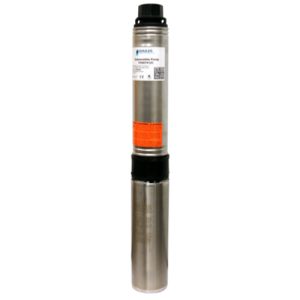
Goulds 18HS10412C Submersible Well Pump
HS series shown; model 18HS10412C.
- Power: 1 HP, 230 V AC, 3-wire motor
- Flow class: nominal 18 GPM; select using the pump curve
- Fit/use: 4-inch wells; matched external control box required
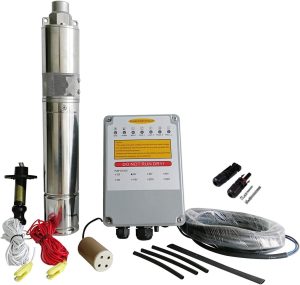
PWS JS3-1.3-50 Solar Submersible Pump
- Power: 24 V DC solar-pump system with MPPT controller
- Limits: up to 5.7 GPM or 165 feet of head, not both together
- Fit/use: approximately 3-inch pump body; off-grid water transfer
Compare the power supply and flow class first, then check the manufacturer’s performance curve for your total dynamic head. A maximum-head figure is not a promise of useful flow at that depth.
Best Submersible Pump for Domestic Use Reviews
Daily water supply calls for a pump sized to the actual installation. Check the electrical supply, well clearance and operating conditions before choosing a model.
Here is a list of our top picks for the best submersible pump for home use.
1. Conventional Household Option- Red Lion RL12G05-2W2V Submersible Well Pump for Domestic Use
Red Lion RL12G05-2W2V is a 1/2 HP, 230-volt option for a household pump for your well. This exact model has a two-wire motor, not the three-wire arrangement that needs a separate starting control box.
Red Lion RL12G05-2W2V Submersible Well Pump
- Power: 1/2 HP, 230 V AC, 2-wire motor
- Flow class: nominal 12 GPM; actual flow depends on head
- Fit/use: 4-inch or larger wells; household water supply
It has a stainless-steel shell, thermoplastic discharge and motor bracket, a suction screen and an integral check valve for preventing backflow. The screen helps exclude debris but does not make the pump clog-proof.
The RL series is designed for wells at least 4 inches in diameter. Confirm the casing clearance and required delivery pressure; the well’s total drilled depth alone does not establish suitability.
This is a nominal 12 GPM model. Delivery varies with head, so use Red Lion’s performance table instead of assuming 12 gallons per minute at every pumping depth.
Pros
- Two-wire motor needs no separate starting control box
- Stainless-steel shell
- Built-in check valve and suction screen
Cons
- Needs a suitable 230-volt circuit and correctly sized well installation
Why Consider It: This is a practical AC-powered option when its flow curve meets the household’s demand, without the separate starting control box used by a three-wire motor.
2. Higher Nominal Flow Class- Goulds 18HS10412C Submersible Water Well Pump
Goulds 18HS10412C is a 1 HP, eight-stage pump with a 230-volt, three-wire motor. Its nominal 18 GPM flow class offers a different sizing option from the smaller Red Lion.
Goulds 18HS10412C Submersible Well Pump
HS series shown; model 18HS10412C.
- Power: 1 HP, 230 V AC, 3-wire motor
- Flow class: nominal 18 GPM; select using the pump curve
- Fit/use: 4-inch wells; matched external control box required
The HS series combines a stainless-steel casing with engineered-composite impellers and diffusers. This four-inch-well model needs the matched external control box for its three-wire motor.
The 18 GPM designation is a nominal operating class, not a guaranteed flow at any depth. Check the 18HS10 curve against total dynamic head and the well’s sustainable yield before selecting it for household demand.
Pros
- 1 HP, eight-stage design
- Stainless-steel casing
- Separate matched control box for the three-wire motor
Cons
- Requires correct pump-curve sizing and professional installation
Why Consider It: It is useful where the 18HS10 curve suits the required flow and pressure. Horsepower alone does not establish that it will serve a larger household.
3. Solar Water-Transfer Option-PWS JS3-1.3-50 Submersible Pump
PWS JS3-1.3-50 is a 24-volt DC solar submersible pump for clean-water transfer. Consider it for an off-grid storage-tank or irrigation setup rather than assuming it is a direct replacement for a conventional pressurized household well system.
PWS JS3-1.3-50 Solar Submersible Pump
- Power: 24 V DC solar-pump system with MPPT controller
- Limits: up to 5.7 GPM or 165 feet of head, not both together
- Fit/use: approximately 3-inch pump body; off-grid water transfer
The selected kit pairs a stainless-steel pump with an MPPT controller. A compatible solar panel array is separate; its electrical specifications must match the controller. Do not assume a battery can be connected without following the kit’s instructions.
The kit includes water-level controls for the well and storage tank. Correct installation and wiring are needed for low-water and tank-full protection.
Its published limits are about 5.7 GPM maximum flow and 165 feet maximum head. These are different operating points: flow falls as head rises, and solar output also depends on available sunlight. MPPT does not maintain maximum flow in all light conditions.
Pros
- 24 V DC solar-pump option
- MPPT controller and water-level controls included
- Compact body for installations with suitable clearance
Cons
- Solar array must be selected separately
- Low-light performance and actual flow depend on the installation
- Confirm drinking-water suitability before using it for potable supply
Why Consider It: It provides a solar-powered water-transfer option. Size the pump, solar supply and storage capacity together, rather than expecting uninterrupted household pressure from the pump alone.
Best Submersible Pump for Domestic Use Buying Guide
These three pumps serve different installation requirements. Match the pump to the well and power source before choosing; neither a larger motor nor solar operation automatically makes one model more efficient for your use.
However, we are determined to make you aware of the full criterion for selecting the best pump. Here are some of the crucial considerations any potential buyer should make.
The Water Flow Rate
Flow rate is the volume delivered per minute, usually shown in GPM. Use the curve at your total dynamic head: the lift from the pumping water level, required outlet pressure and pipe friction all matter. Also check that the well can sustainably supply that flow.
Check the Build
Check which materials contact the water and whether the pump is suitable for its quality and temperature. Stainless steel can resist corrosion, but it is not immune under all conditions. A material description alone does not certify a pump for drinking water.
Check the Well Diameter
The casing diameter determines physical clearance for the pump and cable; it does not by itself determine well yield or how powerful the pump should be. Use the manufacturer’s minimum well size and allow the required clearance.
Check the Pump Wiring
For these single-phase AC well motors, “two-wire” and “three-wire” refer to motor conductors, excluding the grounding conductor. Two-wire motors contain their starting components internally. Three-wire motors require a matching external control box. The PWS DC/controller system is a separate arrangement, not an interchangeable wiring option.
Conclusion
When comparing pumps to draw water from your well, start with the pumping level, flow requirement and available power. Those measurements matter more than a headline maximum depth.
The Red Lion RL12G05-2W2V remains our conventional household pump starting point when its curve matches the installation. The Goulds offers a different nominal flow class, while the PWS addresses off-grid transfer to storage.
Have the chosen pump checked against the well’s yield and required delivery pressure before installation.