
When choosing an elliptical with a high weight capacity, check the exact model’s maximum user weight first. Stride length, access to the pedals and the space needed during use matter too; a high load rating alone does not establish a comfortable fit.
These two options cover different exercise positions: the Teeter FreeStep LT1 is a seated cross trainer rated for users up to 300 pounds, while the NICEDAY CT11-16IN is a standing elliptical rated up to 400 pounds. Neither should be used above its stated limit.
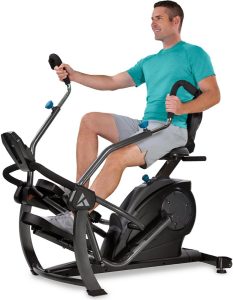
Teeter FreeStep LT1 Recumbent Cross Trainer
- Seated cross trainer; 300 lb maximum user weight
- 13 levels of manually adjusted magnetic resistance
- Adjustable seat height, backrest and handles
- Display tracks time, distance, speed and calories
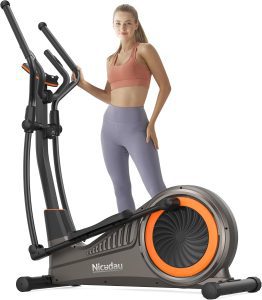
NICEDAY CT11-16IN Elliptical, Orange
- Standing elliptical; 400 lb maximum user weight
- 16-inch stride and 16 magnetic resistance levels
- Moving handles plus fixed pulse-sensor grips
- Digital monitor and front transport wheels
Ellipticals With High Weight Capacity Reviewed
1. Teeter FreeStep LT1 Recumbent Cross Trainer
The FreeStep LT1 lets you exercise in a seated position using linked pedals and moving handles. Its backrest and adjustable seat can suit someone who prefers seated exercise, but it should not be confused with a conventional standing elliptical.
Teeter FreeStep LT1 Recumbent Cross Trainer
- Seated cross trainer; 300 lb maximum user weight
- 13 levels of manually adjusted magnetic resistance
- Adjustable seat height, backrest and handles
- Display tracks time, distance, speed and calories
Teeter specifies a 300-pound maximum user weight for the LT1 and LT3. The 350-pound figure used in some FreeStep family listings belongs to the LT7, not the LT1 linked here. Teeter lists an intended user-height range of 4 feet 11 inches to 6 feet 6 inches; adjust the seat and handles before starting.
The LT1 has 13 magnetic resistance settings, selected with a dial. Seat height and backrest position adjust for fit, and the handles offer several grip positions. Its display tracks time, distance, speed and estimated calories rather than providing a medical assessment of your workout.
The seated stepping movement differs from running, but it does not guarantee freedom from joint pain or make the machine suitable for every medical condition. The LT1 is home exercise equipment; ask your clinician about suitability if an injury or health condition affects exercise.
Measure the full space required for pedal and handle movement as well as room to get on and off. Allow the linked parts to stop before dismounting and keep hands, feet, children and pets away from the moving linkages.
High-capacity treadmill options
Pros
- Seated exercise with adjustable seat and handles
- 13 manually controlled resistance levels
- Linked upper- and lower-body movement
Limitations
- 300-pound maximum; not suitable for users above that limit
- Seated cross trainer rather than a standing elliptical
- Basic display without a built-in pulse sensor
Best small walking treadmills for seniors
2. NICEDAY CT11-16IN Elliptical, Orange
The orange CT11-16IN is the standing option in this comparison. Its 400-pound rating provides a higher stated load limit than the Teeter LT1, while the 16-inch stride makes it important to check your own movement and fit before choosing it.
NICEDAY CT11-16IN Elliptical, Orange
- Standing elliptical; 400 lb maximum user weight
- 16-inch stride and 16 magnetic resistance levels
- Moving handles plus fixed pulse-sensor grips
- Digital monitor and front transport wheels
This exact variant has 16 magnetic resistance levels and a 16-inch stride. Other NICEDAY listings include 15.5-, 19- or 20-inch models, so check the selected variant rather than relying on a family title.
Moving handles allow arm movement during pedaling. The separate fixed grips carry the pulse contacts. The digital monitor shows workout measures such as time, speed, distance and estimated calories; pulse readings from the grips are not for medical diagnosis or treatment.
Front transport wheels help reposition the machine, but assembly and moving it still require care. Set it on a solid, level floor with enough room for the moving handles and pedals. Follow the manual’s instructions for tightening and checking fasteners, and stop using it if parts are damaged or movement becomes irregular.
A magnetic resistance system avoids an air-resistance fan, but this does not promise silent operation in every room. Floor construction, assembly and maintenance can all affect what nearby people hear. A short stride also will not suit every taller user, even when their weight is within the limit.
Pros
- 400-pound maximum user weight
- 16 resistance settings
- Moving handles and separate fixed grips
- Transport wheels for repositioning
Limitations
- 16-inch stride may feel short for some users
- Pulse contacts require holding the fixed grips
- Basic monitor; exercise readings are estimates
Video: a general comparison of treadmills and standing ellipticals, not a review of the two models above.
Choosing between seated and standing exercise
Choose the Teeter LT1 only if you are within its 300-pound limit and prefer a seated stepping motion. Consider the NICEDAY CT11-16IN for standing elliptical exercise within its 400-pound limit, provided its stride, access and space requirements fit you.
Do not assume that an elliptical burns two or three times as many calories as a treadmill or prevents joint pain. Exercise intensity, duration and individual factors affect the experience. Compare these exercise machines on practical fit and controls rather than a promised outcome.
This study of elliptical accessibility illustrates why getting on, off and moving the pedals can be challenging for some people with disabilities. It did not test these two models, and it is not a guarantee of their suitability.
Treadmills with incline and decline