
Do you have well water? Choosing a water heater starts with testing the supply and checking your household’s hot-water demand. Hardness, sediment, acidity and available pressure vary from well to well.
A tankless heater does not remove minerals or make unsuitable well water suitable for use. Scale can build up in tankless heat exchangers too, so water treatment and maintenance must follow the manufacturer’s requirements.
The three heaters below offer different capacities and energy sources. Before buying, have an installer check your water quality, inlet temperature, pump pressure and electrical or gas supply.
Here is a quick look at the three options.
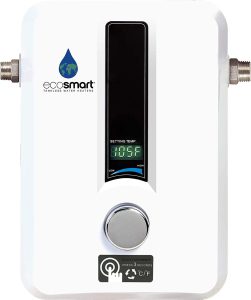
EcoSmart ECO 11 Electric Tankless Water Heater
- 13kW, 240V electric point-of-use heater
- Digital temperature control
- Size by inlet temperature and required hot-water flow
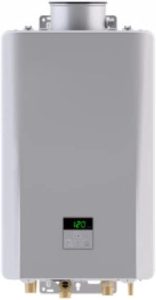
Rinnai RE180iP Propane Tankless Water Heater
- Indoor propane model with 180,000 BTU/h maximum input
- 8.5 GPM maximum; flow decreases as temperature rise increases
- Requires approved venting, propane supply and 120V electricity

Top 3 Best Hot Water Heaters for Well Water

1. Point-of-Use Option: EcoSmart ECO 11 Electric Tankless Water Heater
The EcoSmart ECO 11 is a compact, 13kW electric tankless heater suited to smaller hot-water demands. It is not a special treatment device for mineral-rich or acidic well water.
EcoSmart ECO 11 Electric Tankless Water Heater
- 13kW, 240V electric point-of-use heater
- Digital temperature control
- Size by inlet temperature and required hot-water flow
Digital temperature control allows adjustment in 1-degree increments. The manufacturer describes point-of-use applications such as a faucet, or a shower in warmer climates. Colder inlet water reduces the flow available at your chosen outlet temperature.
The ECO 11 requires a 240V supply with a dedicated 60A double-pole breaker and the specified wiring. Have a qualified installer confirm electrical capacity and the sizing chart before choosing it for multiple fixtures.
Hard water calls for more frequent maintenance according to EcoSmart’s manual. Address sediment and water chemistry separately rather than relying on the heater to prevent scale.
Pros
- Compact wall-mounted design
- Digital temperature setting
- No combustion venting required
Cons
- Limited output for simultaneous fixtures or cold inlet water; requires a substantial dedicated circuit
Read: Gas heater for mobile home
2. Propane Option: Rinnai RE180iP Tankless Water Heater
The Rinnai RE180iP is an indoor propane tankless heater with up to 180,000 BTU/h input. It provides on-demand hot water within its rated capacity; it does not guarantee unlimited simultaneous flow.
Rinnai RE180iP Propane Tankless Water Heater
- Indoor propane model with 180,000 BTU/h maximum input
- 8.5 GPM maximum; flow decreases as temperature rise increases
- Requires approved venting, propane supply and 120V electricity
The maximum rated flow is 8.5 GPM, but usable hot-water flow falls as the required temperature rise increases. Size the unit using the coldest expected inlet temperature and the fixtures you plan to run together.
Professional installation requires an adequate propane supply, approved combustion-air and exhaust arrangements, water connections and 120V electricity. The heater does not increase the pressure supplied by your well pump.
Tankless heating avoids storing a large tank of hot water, but water still takes time to travel through the pipes to a distant faucet. Water quality must meet the manufacturer’s requirements, and scale-related maintenance remains necessary.
Pros
- Indoor propane option
- Compact on-demand heating
- Electronic ignition
Cons
- Requires venting, gas-line sizing and professional installation
Read: Dog heaters for outside
3. Whole-House Electric Option: Stiebel Eltron Tempra 29 Plus (239223)
The Stiebel Eltron Tempra 29 Plus, part 239223, is an electric tankless heater for higher demand than a small point-of-use unit. Suitability for several bathrooms depends on inlet temperature and simultaneous flow.
It requires no combustion venting and is rated at 28.8kW on 240V, or 21.6kW on 208V. At 240V, the manufacturer specifies three dedicated 40A double-pole circuits with the required copper conductors. An electrician must assess the home’s service and other loads; a nominal 200A service alone does not establish suitability.
Advanced Flow Control reduces water flow if demand exceeds heating capacity, helping maintain the selected outlet temperature. This is a flow limit, not an unlimited-output guarantee.
The digital controls allow temperature adjustment, while maintenance includes checking the inlet filter and removing scale as needed. Check Amazon price.
Pros
- Compact design without combustion venting
- Digital temperature control
- Advanced Flow Control helps maintain temperature under excess demand
Cons
- High electrical demand; flow may be reduced when demand exceeds capacity
Read: Hydronic baseboard heaters cost to operate
Buying Guide to the Best Hot Water Heaters for Well Water
A well-water supply does not automatically require a special heater. Match the water test results to the chosen model’s water-quality limits, then size the heater for your climate, demand and energy supply.
Flow and Supply Pressure
Check that the well pump and pressure system can maintain the heater’s required inlet pressure and activation flow. A higher advertised GPM rating does not boost supply pressure. Compare hot-water output at the required temperature rise, not just the maximum flow number.
Temperature Rise and Demand
Measure or estimate the coldest inlet-water temperature and the desired outlet temperature. This temperature difference, together with simultaneous fixture flow, determines the required heating capacity.
Recovery rate describes reheating a storage tank. For these tankless models, use the manufacturer’s temperature-rise and flow chart instead.
Water Conditioning
Test for hardness, sediment and other water-quality issues before selecting treatment. A softener addresses hardness; it does not replace treatment for every possible contaminant or acidic water.
None of these heaters includes a built-in water softener. Have an installer select suitable treatment and a maintenance schedule based on the water test and the heater manual.
Frequently Asked Questions on Tankless Water Heaters
Are Tankless Water Heaters Recommended for Well Water?
Tankless heaters can be used with well water when the supply meets the manufacturer’s water-quality, pressure and flow requirements. They do not treat the water or prevent scale automatically; sizing and maintenance still matter.
Can Hard Water Ruin a Water Heater?
Hard water can deposit scale on heating surfaces, restrict flow and reduce performance. Water testing, suitable treatment and the maintenance specified in the heater manual help manage this; freeze protection is not protection against scale.
Which Water Heater is Best for Hard Water?
There is no universally best heater for untreated hard water. Choose a correctly sized model whose water-quality requirements you can meet, and plan any necessary treatment and descaling before installation.
If you’re in the market for a hot water heater, be sure to consider all of your options. A tankless water heater might be a good choice if you have well water.
We hope this post has helped you learn more about the different types of hot water heaters and which might be best for your needs. Reach out to us if you have any questions or need our help choosing the best product for your home.
Read: Convection heater