Many homeowners choose hardwood floors for their appearance and durability. When planning a new floor, underlayment selection depends on the type of flooring, the subfloor and the installation method.
The products below are options for compatible floating engineered-wood and laminate floors. They are not a universal specification for nailed or glued solid hardwood, or for vinyl flooring. Follow the flooring manufacturer’s instructions before adding any cushioning layer.
An approved underlayment can contribute cushioning, sound reduction and moisture-vapor control. It cannot repair a wet or uneven subfloor, guarantee silent footsteps or replace the required floor preparation.
Compare the material and roll coverage alongside the flooring requirements:
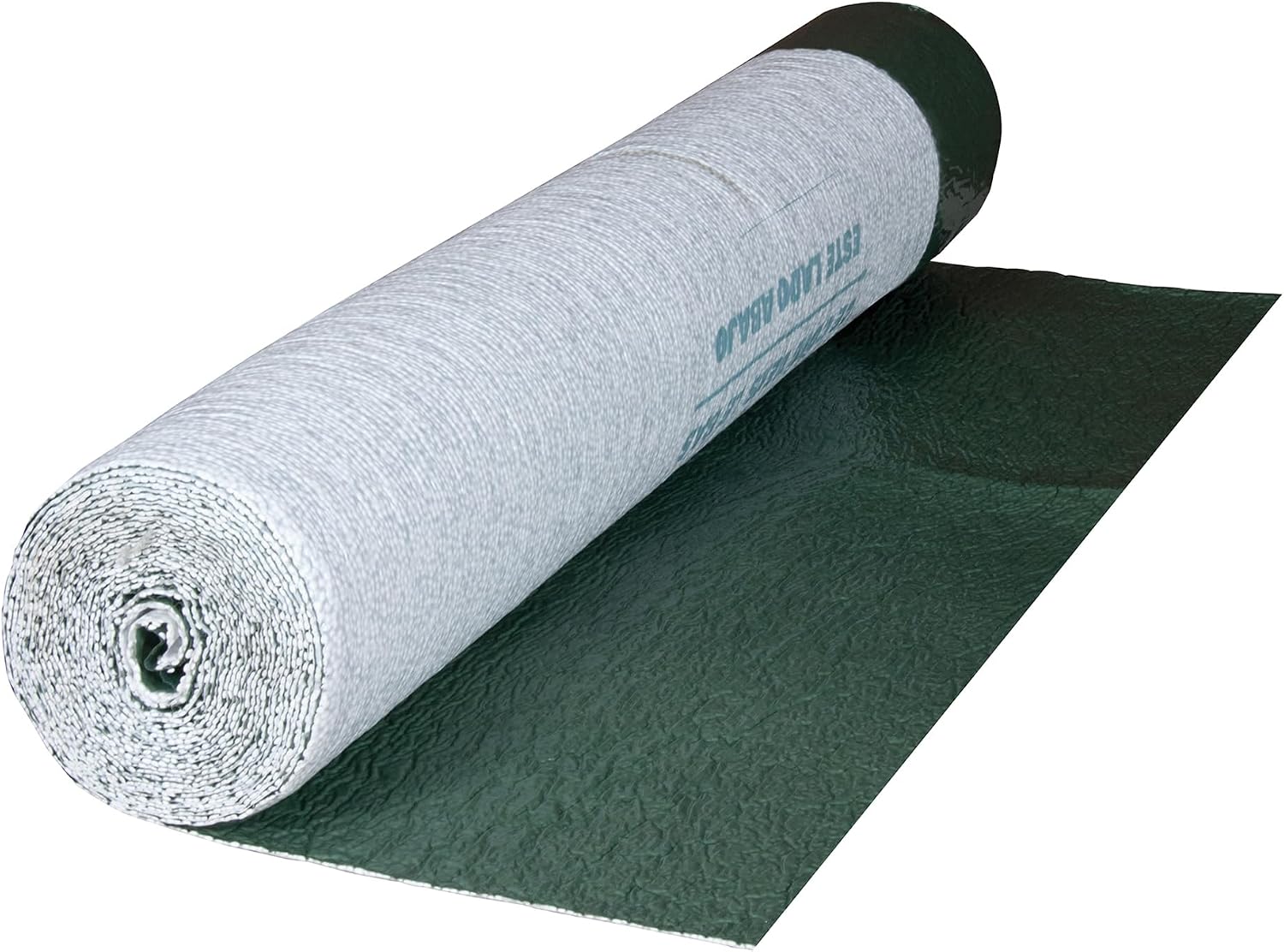
- First Step: a 2 mm bead-and-film underlayment in a 100 sq. ft. roll.
- Unison: a 3/32-inch polyethylene-foam underlayment in a 100 sq. ft. roll.
Underlayment for Floating Engineered Wood Floors
1. Roberts First Step 100 sq. ft. Underlayment
First Step 70-102-12 is the 100 sq. ft. version, measuring 40 inches by 30 feet and 2 mm thick. Check this coverage when calculating quantities; it is a different roll size from the 630 sq. ft. package.
Roberts First Step 70-102-12 — 100 sq. ft.
- For compatible floating engineered-wood and laminate floors.
- 2 mm thick; 40 in. × 30 ft. roll covers 100 sq. ft.
- Polystyrene beads between film layers; adhesive joining strip.
Its bead-and-film construction provides an air space beneath the top moisture-control layer. Roberts describes antimicrobial protection and moisture-vapor management, but neither makes the floor immune to mold, leaks or moisture damage.
The installation guide requires a clean, dry, prepared subfloor and compliance with the flooring manufacturer’s instructions. On concrete, it specifies a moisture-emission limit of 3 lb per 1,000 sq. ft. per 24 hours using the stated calcium-chloride test; check all requirements for your flooring system before installing.
Best 2 step ladder for seniors
Pros
- Defined 100 sq. ft. roll size for planning a smaller installation.
- Film overlap and adhesive strip join adjacent rows.
- Designed for sound reduction in compatible floating-floor systems.
Cons
- Not a general-purpose vinyl or solid-hardwood installation layer.
- Moisture testing and subfloor preparation remain necessary.
Wall mounted rolled towel rack
Underlayment for vinyl flooring on concrete
2. Roberts Unison 70-025 Underlayment
Unison 70-025 is a 100 sq. ft. roll measuring 48 inches by 25 feet. It uses 3/32-inch polyethylene foam with a 2-mil top film for moisture-vapor protection.
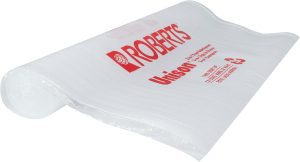
Roberts Unison 70-025 — 100 sq. ft.
- Polyethylene foam, 3/32 in. thick, with a 2-mil top film.
- 48 in. × 25 ft. roll covers 100 sq. ft.
- For compatible laminate and engineered-wood flooring.
The 3-inch film flap and adhesive strip connect neighboring rows. Follow the installation guide for seam and perimeter treatment; overlap the film as directed rather than stacking the foam layers.
The manufacturer describes on- and above-grade use, with an additional moisture barrier required for below-grade applications. Confirm the complete moisture-control specification for the flooring and subfloor rather than assuming the top film is enough in every location.
Pros
- 100 sq. ft. roll with integrated film and seam-joining strip.
- Provides cushioning and some sound reduction in compatible installations.
Cons
- Below-grade use needs the additional moisture-control measures specified by the manufacturer.
- No guarantee of a waterproof, mold-free or silent finished floor.
When Underlayment Helps a Hardwood Floor
Select underlayment as part of the flooring system, before installation. The flooring manufacturer’s requirements take priority over a general recommendation:
- Moisture management: Test and prepare the subfloor, and use the specified vapor-control system. An underlayment is not a repair for active leaks or excessive moisture.
- Sound reduction: An approved cushioning layer can reduce transmitted impact noise, but the whole floor and building construction affect the result.
- Thermal resistance: Underlayment adds some resistance to heat flow. With radiant heating, check the flooring and heating manufacturers’ permitted materials and combined thermal resistance.
If your flooring requires a different installation system or already has an attached pad, do not add one of these layers without explicit approval. More padding is not automatically better.
For a separate question about flooring emissions, the EPA’s laminate-flooring formaldehyde Q&A explains that issue; it does not establish underlayment compatibility.
Choose a compatible material and buy enough coverage for the room and cutting waste. These underlayment options serve different approved setups, rather than guaranteeing the same result under every hardwood floor.
Fridge compressor starts then stops