
Brake-pad selection for a Harley-Davidson Touring motorcycle starts with the exact model, year, caliper and wheel position. A pad advertised for Harley-Davidson is not automatically suitable for every Touring bike. Match the part before comparing compounds or prices.
EBC Double-H Pads for Compatible Touring Applications
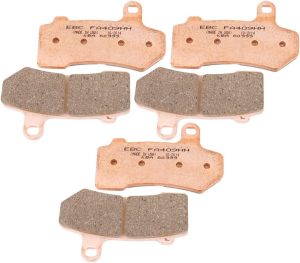
EBC Brakes EBPCK1027 Double-H Brake Pad Kit
- Kit containing two front sets and one rear set of FA409HH pads
- Double-H sintered copper-alloy friction material
- For applications requiring that exact pad shape and compound
- Confirm model year, calipers and front/rear fit before ordering
This kit groups three FA409HH pad sets for a compatible dual-front-disc and single-rear-disc application. That means six individual pads, not three. It is a fit-specific option rather than a universal Touring kit.
For example, the EBC catalog lists FA409HH at the front and rear of the 2014–2015 FLHX Street Glide and the 2015 FLHXS Street Glide Special; the front application requires two sets. These are examples within the linked kit’s listed applications. Confirm your complete model designation and original or replacement calipers in the EBC application catalog before purchase.
EBC’s Double-H range uses sintered copper-alloy material. Compound choice should also suit the rotor and intended use. Do not treat an HH label as a guarantee of a particular stopping distance, pad life or absence of noise.
Check Fit Before Ordering
- Identify the full motorcycle model and model year, not only the Touring family name.
- Confirm the installed calipers and rotors; aftermarket conversions may change the required pad.
- Look up front and rear applications separately and confirm how many sets are needed.
- Check the complete kit part number and contents with the seller. Compare the delivered markings and shape before installation.
FA400 and FA409 identify different pad shapes. Do not substitute one for the other because a listing contains a familiar Harley-Davidson model name. Use the manufacturer’s part finder or ask a qualified motorcycle parts specialist when the application is unclear.
If a pad does not line up correctly, stop and obtain the correct part. Do not machine, grind or modify a brake pad to force it into a different caliper. A low price does not compensate for incorrect fit.
Condition and Installation Matter
Pad replacement is also an opportunity to inspect rotor condition, caliper movement and the required retaining hardware. Follow the motorcycle service manual for wear limits, fasteners, fluid handling and installation. A kit of pads should not be assumed to include every hardware item required for the job.
Keep grease and oil away from pads and rotor friction surfaces. Use a qualified technician if you cannot verify the application or complete the brake work to the manufacturer’s procedure. After installation, follow the applicable bedding-in instructions and checks before returning to normal riding.
What to Expect from New Pads
Service life depends on riding conditions, loading, rotor condition and use. A reported mileage from another motorcycle cannot predict yours. New pads also do not correct a damaged rotor, sticking caliper or hydraulic fault. Investigate persistent noise, poor braking or uneven wear rather than assuming it is normal.
Related Workshop Guides
For other maintenance tasks, see our guides to an oil drain pan, a grease gun, automotive impact wrenches and grease-gun fittings. They cover separate workshop jobs; brake servicing requires its own speci