
A backpack leaf blower can help move leaves and grass clippings across a large property while keeping both hands free of a heavy handheld motor. The engine still rests on your back, so fit, loaded weight and working conditions matter as much as advertised power.
The Husqvarna 360BT below is a gas-powered option to compare for demanding cleanup. This guide explains its documented specifications and the practical buying checks; it does not claim that we personally tested or ranked it against every commercial blower.
Husqvarna 360BT Backpack Blower
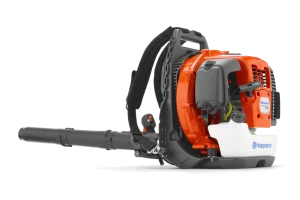
Husqvarna 360BT Backpack Leaf Blower
- 65.6cc two-stroke X-Torq engine
- 631 CFM and up to 232 mph at the round nozzle
- 23.2lb without fuel
- Ventilated harness and adjustable offset handle
The selected 360BT is model 967144301. Husqvarna lists 631 CFM at its round nozzle and a maximum nozzle air speed of 232 mph. Its larger 890-CFM figure describes airflow at the blower housing, so it should not be compared directly with another manufacturer’s nozzle rating.
The ventilated harness and wide straps spread the load across your shoulders. An offset handle and cruise control help with operation, but they do not make a full fuel tank weightless or guarantee that the blower will suit every operator. Try the harness adjustment and consider how long you can comfortably carry it.
The 23.2lb weight excludes fuel. Its 74.4-fluid-ounce tank adds weight when filled, and the actual runtime depends on throttle setting and workload. Do not assume that tank capacity alone guarantees an uninterrupted hour of use.
The air-purge system assists starting. Follow the model’s fuel-mixture, starting and maintenance instructions, including its two-stroke oil requirements. The 360BT blows debris; a vacuum collection kit is not included.
Strengths: Substantial nozzle airflow, adjustable controls and a backpack format for larger cleanup jobs. Limitations: Gas maintenance, exhaust, noise and carrying weight. Check whether local rules permit gas blowers at the intended property.
Commercial Backpack Leaf Blower Buying Guide
Compare airflow at the same measurement point
CFM describes air volume, while mph describes air speed. Look for figures measured at the nozzle with the specified tube fitted. A high number measured inside the housing is not the same as the airflow delivered through the working nozzle.
Air volume is also discussed in our guide to compressor CFM, but compressor modifications are not instructions for modifying a leaf blower. Use only the blower’s approved tubes and accessories.
Engine size is only part of the decision
Cylinder displacement, measured in cc, describes engine size rather than a guaranteed rate of leaf removal. Fan design, nozzle shape, controls and the condition of the leaves also affect the job. There is no universal displacement threshold that makes a blower suitable for every commercial property.
Gas and battery backpack blowers have different refueling or charging needs. Commercial use is not restricted to gas models. Compare the complete system, operating limits and support available for your workload rather than choosing by power source alone.
Consider loaded weight and access
A padded harness can distribute the load but cannot remove it. Check the weight with the fuel or batteries required for work, and allow for breaks. Keep stable footing and do not operate a backpack blower from a ladder or an unstable platform.
For larger open areas where carrying a blower is unsuitable, compare our guide to leaf blowers on wheels. A wheeled blower still requires pushing and steering, particularly on uneven terrain.
Understand the noise figures
A sound-power figure, a measurement at the operator’s ear and a rating taken 50 feet away describe different conditions. Do not rank blowers as quiet by mixing these numbers. Follow the manual’s hearing-protection requirements and check local noise and operating-hour restrictions.
Use the lowest effective throttle setting and keep people clear of the discharge. Wear the specified eye protection. Avoid blowing rocks, dust or debris toward people, traffic, windows and neighboring property.
For general cleanup planning, see the Schultz leaf-blowing tips. Follow your blower’s manual and local operating-hour rules when applying general advice.
Plan fuel, maintenance and storage
Run a gas blower outdoors with adequate ventilation. Stop the engine and let it cool before refueling. Keep the intake, filter and cooling areas maintained according to the supplied manual; servicing instructions must match the exact model.
Our lawn-mower paper-filter guide covers a different machine type. Consult the 360BT manual before cleaning or replacing its own filter rather than assuming that every filter uses the same treatment.
Check warranty and dealer support
Warranty coverage can differ for personal, commercial and rental use. Confirm the applicable terms and seller support before buying, especially if downtime would interrupt paid work. Access to correct replacement parts and service can matter more than an advertised warranty length alone.
Choose for the Actual Cleanup Job
The 360BT is worth comparing when a gas backpack format, carrying weight and maintenance schedule fit your property. Match the blower to access, debris and operator comfort rather than treating the biggest engine or highest headline CFM as an automatic winner.
Related: Backpack mosquito foggers for a different garden task
Related: Propane insect foggers