
A string trimmer reaches grass and weeds around borders, fences and other areas a mower cannot cover. The best value depends on the vegetation, handling and maintenance requirements, not engine size alone.
Gas power can be useful away from an outlet, but it does not make every trimmer suitable for woody brush or any terrain. Choose the complete cutting setup for the work and maintain secure footing.
The ECHO SRM-225 below is a straightforward gas line-trimmer option. This guide compares its documented features and limitations; it does not claim a personal equipment test or guarantee the lowest market price.
Gas Weed Eater for the Money: ECHO SRM-225
The SRM-225 combines a 21.2 cc two-stroke engine with a straight shaft and a 17-inch line-cutting swath. It is intended for suitable grass and weed trimming, including areas a mower cannot reach.
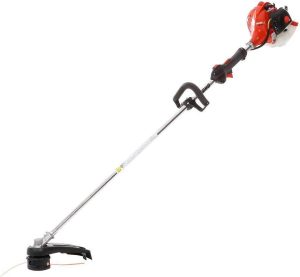
ECHO SRM-225 Gas String Trimmer
- 21.2 cc two-stroke engine
- 17-inch cutting swath and 59-inch straight shaft
- Speed-Feed 400 line head
- Requires the specified 50:1 gasoline/two-stroke-oil mix
The 59-inch shaft provides reach around lawn edges and obstacles. A loop-style front handle and rear throttle grip support two-handed control; adjust the working position and follow the operator’s manual.
Its Speed-Feed 400 head is designed to reload without taking the head apart. Use the approved line size and winding procedure rather than forcing in thicker line to tackle heavier material.
ECHO lists an i-30 starting system, vibration reduction and tool-less access to the air filter. These features do not eliminate normal starting checks, engine maintenance or the need for hearing and eye protection.
The engine uses a specified 50:1 mix of gasoline and appropriate two-stroke oil. It is not a four-stroke engine with a separate crankcase-oil supply. Use the fuel grade and oil standard specified in the manual, and stop the engine before refueling.
Strengths
- 17-inch line-cutting swath for grass and weeds
- Straight-shaft reach and two-handed controls
- Speed-Feed 400 head for convenient line loading
- Manufacturer support for model-specific wear parts
Limitations
- Requires correct two-stroke fuel mixing and engine servicing
- Line-head operation is not a substitute for a dedicated brush-cutting setup
- Not an interchangeable-attachment powerhead simply because it has a straight shaft
What Makes a Gas Trimmer Good Value?
Compare the total cost of the tool, suitable fuel and oil, replacement line, servicing and protective equipment. A lower purchase price is less useful if the tool does not suit the work or parts are difficult to obtain.
A larger engine does not automatically produce a better result. Cutting-head design, line condition, working width and operator control also matter. Refueling extends a job, but fuel consumption, maintenance and rest breaks mean runtime is not unlimited.
Weight figures can exclude the head, fuel or harness. Compare like-for-like operating configurations and check whether the shaft length and handles suit you, especially for longer sessions.
Line Trimming, Edging and Brush Cutting
The standard line head is for grass and suitable weeds. Keep the correct guard fitted, clear loose debris from the work area and observe the manual’s exclusion distance for bystanders.
Do not fit a metal blade just because its mounting hole appears to fit. Any blade conversion requires the exact manufacturer-approved blade, guard, handle or barrier arrangement, harness and installation instructions for that model. It is a different setup from the line trimmer pictured above.
The SRM-225 is not a PAS split-shaft attachment system, and this listing does not include a cultivator, pole saw or hedge-trimmer attachment. A straight shaft alone does not establish accessory compatibility.
For much larger vegetation-management equipment, see our separate skid-steer brush-cutter guide. Those machines are not replacement heads for a handheld trimmer.
Two-Stroke Versus Four-Stroke Engines
Two-stroke trimmers such as the SRM-225 mix the specified engine oil into the fuel. A four-stroke trimmer normally has a separate crankcase-oil supply that must still be checked and serviced. No premixing does not mean no oil maintenance.
Neither engine type guarantees less noise, more power or safe operation on every slope. Compare the exact tool’s operating instructions and configuration rather than applying a blanket rule to all gas trimmers.
Line-Head Maintenance and Storage
Stop the engine and follow the manual’s service precautions before working on the head. Use the specified line and loading direction, and replace worn parts with compatible items.
For additional background, see how to keep trimmer line from sticking and how a two-hole weed-eater head is strung. The exact head’s instructions take priority over a generic method.
If replacing the head, confirm model, shaft thread, line size and guard compatibility. Our replacement weed-eater head guide covers the selection questions.
Clean and inspect the tool, service the filter and spark plug at the recommended intervals, and follow the manufacturer’s fuel-storage procedure. Secure the equipment for transport; see weed-eater racks for trailers for a separate storage topic.
Choosing the Right Tool for Your Yard
The ECHO SRM-225 is worth comparing when you want a conventional gas line trimmer and accept its fuel-mixing and maintenance requirements. It should be selected for its intended grass-and-weed role, not because it can supposedly cut every kind of vegetation.
For smaller or quieter jobs, compare suitable battery-powered weed eaters. A propane weed burner is a separate flame-weeding tool with different site restrictions; it is not a universal substitute for a string trimmer.