Cutting cast iron pipe calls for a tool and accessory rated for the material. A blade that cuts ordinary steel is not automatically the right choice for a cast-iron drain pipe.
The condition and diameter of the pipe, access around it and the support available all affect the method. This guide compares a soil-pipe snap cutter, an angle grinder and a reciprocating saw, and explains the limits of an oscillating tool.
Before cutting installed pipe, identify its service and arrange the necessary isolation and drainage. Support the remaining pipe and the section being removed, particularly on vertical runs. If the support or pipe condition is uncertain, have a qualified plumber assess it before starting.
How to cut cast iron pipe – tools and step by step instructions
For a project involving cast iron pipe, choose equipment within its stated pipe-material and size limits. Read the tool and accessory instructions; the outlines below do not replace the model-specific procedure.
How to cut cast iron pipe using a snap cutter
A soil-pipe snap cutter tightens a chain of cutting wheels around the pipe until it fractures along the marked line. Different models use different operating mechanisms and have different capacities. Old or deteriorated pipe can break unevenly, so a clean edge is not guaranteed.
Instructions
- Inspect the cutter and its chain, confirm the model is rated for the pipe type and diameter, and support the pipe so the cut section cannot drop.
- Mark the cut line squarely around the pipe. Position and secure the chain with its wheels aligned on the mark, following the cutter manual.
- Keep yourself and bystanders clear of the pipe and chain. Operate the cutter using the specified handle or drive method, without forcing it or adding unapproved extensions.
- After the cut, check the pipe end for damage before fitting the connection.
Tip: A rental center may have a suitable soil-pipe cutter for an occasional job. Confirm its capacity and obtain the operating instructions with the tool.
How to cut cast iron pipe with an angle grinder (also disc grinder or side grinder)
An angle grinder can cut cast iron when fitted with a compatible cut-off wheel explicitly rated for that material. A diamond cup grinding wheel is a surface-grinding accessory, not a substitute for a pipe-cutting disc.
How Does It Work?
Match the wheel diameter, arbor, maximum speed and required guard to the grinder manual. The word “diamond” alone does not establish that a wheel is suitable for cutting cast iron.
The LENOX METALMAX 1972921 is a 4-1/2-inch diamond-edge cut-off wheel with a 7/8-inch arbor. LENOX lists cast iron among its intended materials. It is an option only for a compatible grinder and cutting guard; check the wheel label and grinder manual before use.
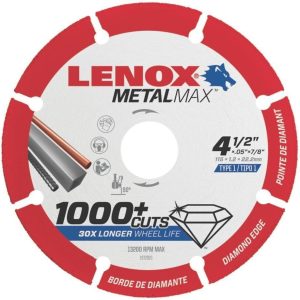
LENOX METALMAX 1972921 4-1/2-Inch Cut-Off Wheel
- 4-1/2-inch diameter and 7/8-inch arbor
- Diamond-edge cut-off wheel; manufacturer lists cast iron
- Verify grinder size, arbor, speed rating and required cutting guard
Instructions
- Disconnect the grinder from power before fitting the correctly rated cut-off wheel and the guard specified for cutting. Inspect the wheel and follow its mounting instructions.
- Mark the cut and clamp or otherwise securely support the pipe and cut section. Keep the cutting area clear of combustible material and provide the protective equipment and dust control required by the tool and work conditions.
- Use both hands on the grinder as directed by its manual. Guide the wheel through the cut without twisting it, jamming it or applying sideways pressure.
- If access requires repositioning the pipe, switch off and wait for the wheel to stop before adjusting the work. Re-secure the pipe before continuing.
Tip: Wear the eye, face and hearing protection specified for the job. Do not use a grinder where sparks could ignite flammable material or gases.
How to cut cast iron pipe with a reciprocating saw
A reciprocating saw is another option when there is room for the blade and its full stroke. Use a blade explicitly intended for cast iron rather than assuming that any metal-cutting blade will work.
The LENOX 800RDG (10833800RDG) is an 8-inch diamond-grit reciprocating blade. LENOX lists cast iron among its applications; the blade measures 8 × 3/4 × .040 inches. Choose a blade length that clears the work throughout the stroke and is compatible with your saw.
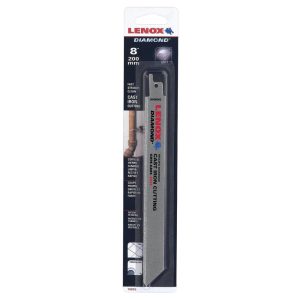
LENOX 800RDG 8-Inch Diamond-Grit Reciprocating Blade
- Model 10833800RDG; one blade
- Diamond-grit edge for manufacturer-listed cast iron applications
- 8 × 3/4 × .040 inches; verify saw fit and required cutting clearance
Cut quality still depends on pipe condition, support and technique. A reciprocating blade does not guarantee a perfectly smooth end on every pipe.
Instructions
- Disconnect the saw from power before fitting the blade according to its instructions.
- Mark the cut line and clamp or otherwise support the pipe securely. Do not have another person hold the pipe beside the cutting blade.
- Keep the saw shoe against the work where the manual requires it, maintain a stable grip and use the speed and feed recommended for the saw, blade and material.
- Let the blade do the cutting without forcing it. Stop the saw before clearing a jam or repositioning the work, and wait for the blade to stop before setting the saw down.
Related outdoor-tool guide: hand saws for cutting down trees. Those saws are intended for a different job.
Cutting cast iron pipe with an oscillating tool
Do not assume that an oscillating blade labeled for metal is suitable for cutting through cast-iron drain pipe. Its approved materials, cutting depth and tool interface must all match the job. The Bosch OSL114C is marketed for sheet metal and abrasive materials; that description alone does not establish suitability for a complete cast-iron pipe cut.
For this job, choose a specifically approved pipe-cutting method above instead of relying on a generic oscillating blade. Do not force a shallow plunge-cut blade through the pipe or deliberately bend the remaining wall until it breaks.
Wrapping it up
Whether repairing a drain or planning an upgrade to PVC, select the cutting method for the actual pipe and available access.
A correctly sized soil-pipe cutter or a suitable cast-iron cutting blade can be useful, but the pipe must be supported and the equipment used within its instructions. Check the cut end and use the connection specified for your plumbing system.