
A snow plow for a Polaris Ranger must match the vehicle’s model year, chassis and mounting arrangement. Ranger, Ranger XP and RZR names do not identify one universal mounting pattern. Begin with the exact vehicle identification and a manufacturer fit chart before comparing blade width.
Below is a 66-inch KFI kit to consider for the specific Ranger applications covered by its mount. It requires a suitable lifting winch, and the seller should confirm the supplied mount and push-tube version before purchase.
KFI 66-inch Steel Snow Plow Kit for Selected Polaris Rangers
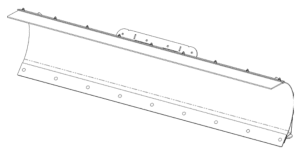
KFI 66-inch Steel Snow Plow Kit for Selected Polaris Rangers
Manufacturer illustration of the 66-inch blade only; the kit also includes a mount and push tubes.
- 66-inch Pro-S steel blade, part 105066
- Listing includes a Ranger mount and push tubes
- 105255 mount requires a stock front bumper on listed vehicles
- Winch purchased separately; verify vehicle year and kit contents
The 105066 straight blade is made from 11-gauge steel and includes a rubber top flap, adjustable skids and a replaceable wear bar. These wear components make routine service possible; they do not make the blade immune to hidden obstacles or eliminate maintenance.
The selected listing identifies mount 105255 and includes push tubes. Confirm the actual tube part number with the seller because KFI has both an older round-tube system and a newer square-tube system. Their adjustment details differ. Use the installation manual for the parts actually supplied rather than assuming that a photograph identifies the tube version.
A suitable winch and its compatible vehicle mounting arrangement are separate requirements for lifting this plow. Check the winch instructions, cable or rope routing and clearance through the lift range. Do not assume a winch is included because the listing calls the plow a kit.
Which Ranger Models Does Mount 105255 Fit?
KFI’s 105255 application chart separates mid-size and full-size vehicles and requires the stock front bumper. Examples include mid-size Ranger 400 models from 2010–2014, mid-size Ranger 500 models from 2011–2013 or 2017–2022, and full-size Ranger 800 models from 2010–2014.
Other entries have different year ranges or chassis qualifications. For example, the chart specifies the 800-body-style, round-tube-frame Ranger 570 for certain full-size applications; the name “Ranger 570” alone is insufficient. Crew, 6×6, XP and diesel versions must each be checked against their own row.
Do not apply those examples to a Ranger XP 1000, a Pro-Fit-frame Ranger or a RZR without an explicit matching entry. Modified suspension, larger tires, tracks or aftermarket bumpers may also change the required parts. Ask KFI or the supplying dealer to confirm the complete combination; an unlisted vehicle is not an invitation to modify the mount.
Buying Guide: Compare the Complete Plow System
Blade Width and Clearing Width
The nominal 66-inch width is measured across the blade. Angling it reduces the width cleared in one pass. Match that working width to the vehicle and tires, along with the plow manufacturer’s recommendations. A fixed rule such as “six inches wider than any Ranger” does not establish compatibility.
Steel, Poly and Wear Parts
Steel and polyethylene-faced blades differ by design, backing structure and wear components. Compare the actual assembly weight and parts availability rather than assuming one material is always lighter or longer-lasting. Inspect the scraper edge and skid shoes regularly, and replace worn parts as instructed.
Snow conditions also matter: loose powder, wet snow and a frozen bank do not impose the same resistance. A snow plow pushes material; it is not an ice-breaking attachment.
Mount, Push Tubes and Winch
The blade, tube system and vehicle-specific mount must be compatible with one another. KFI lists mount 105255 for both its older 105635 round tubes and newer 106300 Pro 2.0 square tubes, but that does not identify which version an individual retailer supplies. Confirm the package before choosing replacement parts or relying on a particular blade-angle mechanism.
Use the winch cable or rope and any pulley or fairlead specified for the lifting arrangement. Neither synthetic rope nor steel cable is automatically correct for every plow setup. Avoid excessive lift or a routing that rubs against the vehicle.
Straight Blade or Another Snow-Clearing Method
A straight blade can direct snow ahead or to the side within its permitted settings. A V-plow is a different system, and neither design guarantees removal of solid ice. Where there is little room to pile snow, compare a blower and its throwing-distance requirements. Our guide to mowers and snow-blower attachments covers a separate equipment category, not Ranger-plow fitment.
Snow-Plowing Tips for a Compatible Ranger Setup
- Inspect the route before snowfall and mark curbs, drains and other hidden obstacles. Keep people away from the working area.
- Follow the vehicle and supplied plow manuals. KFI’s 105635 tube manual limits travel to 5 mph even with the blade raised; a lower limit may be necessary for conditions or other components.
- Use controlled passes and leave space for later snowfalls. Do not ram the blade into a pile or use speed to overcome a frozen obstruction.
- Adjust skid shoes and blade pitch for the surface as instructed. Those adjustments reduce unwanted contact but do not guarantee that paving, gravel or lawns cannot be damaged.
- Inspect fasteners, pins, wear parts and winch components before use. Lower the blade and secure the vehicle as directed before adjustments or leaving the operator’s position.
- Follow the vehicle manufacturer’s requirements for tire pressure, suspension, ballast and chains. Do not increase spring preload or add chains without checking the permitted setup.
- Account for reduced ground clearance and attachment weight. Remove the plow system as instructed before trail riding, and do not treat ordinary vehicle slope limits as approval to plow on ice.
Choose this KFI kit only after its supplied components and your Ranger’s exact application match. The useful comparison is the complete installed system, including the separate winch, rather than blade width or a broad vehicle name alone.
Other equipment guides: Sulkies for walk-behind mowers, clearing brush with a front-end loader, and ditch-bank mowers for compact tractors address different yard tasks.