
A heavy crop of fallen acorns can cover paths and lawns. The practical cleanup method depends on the size of the nuts, the ground surface and how much area you need to clear.
Acorns are also food for wildlife, so you may choose to clear high-traffic areas while leaving some in suitable planting beds.
‘So, what can I do with fallen acorns?’ you ask.
Here are ways to pick up fallen acorns, the limits of each tool and a few options for using what you collect.
Best way to pick up acorns
Start by comparing the size of your acorns with the tool’s stated collection range.
Here is what else you can try:
1. Rake them
The first and perhaps the most straightforward solution for many homeowners is to use a rake for acorns to trap and drag the annoying acorns away from the ground.
A rake can gather acorns into piles, although smaller nuts may pass between the tines and uneven ground can make the work slower.
The major downside for a rake is the tendency to pick up rocks, leaves, sticks, and even grass which brings more work.
As a result, it can take you an awful length of time to clean the mess in bigger yards.
2. Gather them with a Small Nut Gatherer
The Garden Weasel 95334 Small Nut Gatherer is intended for objects about 3/8–3/4 inch in diameter and has a half-gallon cage. Measure a few of your acorns first: large acorns outside that range need a different size gatherer.
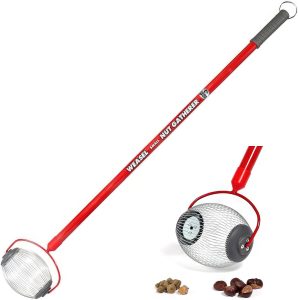
Garden Weasel 95334 Small Nut Gatherer
- For nuts and objects approximately 3/8–3/4 inch in diameter
- Half-gallon collection cage
- Check acorn size and ground conditions before choosing this small gatherer
Roll the cage over the nuts and empty it as it fills. Check the result on a small patch first; long grass, soft ground and debris can make collection less consistent.
The long handle reduces repeated bending during pickup, but the tool still needs to be pushed and emptied.
Choose a handle and operating effort you can manage comfortably rather than assuming any roller will be effortless to use.
3. Vacuum the acorns
A wet/dry shop vacuum is another option to assess for small cleanup areas with suitable dry debris. CRAFTSMAN’s CMXEVBE17595 is a corded 16-gallon model with a 2.5-inch hose and a 6.5 peak-HP rating. The gallon figure describes drum volume; peak horsepower is a laboratory rating, not continuous output.
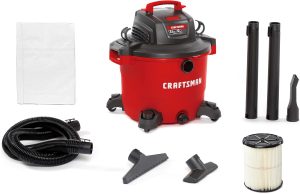
CRAFTSMAN CMXEVBE17595 Wet/Dry Shop Vacuum
- Corded model with a 16-gallon drum and 2.5-inch hose
- 6.5 peak-HP rating; follow the manual for dry-debris pickup
- General-purpose shop vacuum; lawn acorn pickup is not manufacturer-verified
This is a general-purpose shop vacuum, not a manufacturer-verified lawn acorn collector. Check the hose opening, nozzle and debris against the manual, and try a small area before relying on it for a whole lawn. Dense grass and large nuts may make a rake or correctly sized gatherer more practical.
For dry pickup, use the filter specified in the manual and keep the filter and airflow clear. Unplug the vacuum before clearing a blockage; follow the manual’s electrical and outdoor-use precautions.
Best lawn vacuum for acorns reviews
4. Sweep the acorns
A lawn sweeper collects debris with rotating brushes, but a model designed primarily for leaves is not automatically suitable for acorns.
For example, Earthwise describes its LSW70021 as a 21-inch sweeper for leaves, grass and small debris. Its product information does not establish reliable acorn pickup, so it is not recommended here specifically for that job.
Sweepers do not reliably sort acorns from everything else. Remove obstacles and assess the debris first; see our separate guide to picking up rocks in a yard if stones are the main problem.
For a large area, ask the sweeper manufacturer whether the exact model can collect nuts of your measured size. Also check any tow-behind unit’s compatibility with your mower before buying or hiring it.
5. Blow them
A leaf blower may help move loose acorns into a collection area. It moves debris rather than collecting it, and results depend on the surface, grass and nut size.
Start with a controlled airflow and keep people, animals and breakable objects away from the discharge. Gather the resulting pile with a rake or another suitable tool instead of blowing it into neighboring areas.
A backpack model such as the Husqvarna 350BT carries its weight on a harness. Consider the machine’s weight and operating instructions as well as the size of the cleanup area.
Use a blower only where you can control the direction of the loose nuts and collect them afterward.
Easy ways to pick up sticks in yard.
What can I do with fallen acorns?
They say that you should make lemonade out of lemons and perhaps the best way of resolving the repeated acorn inundation is by putting them to a better use.
Here are some ideas:
1. Make a delicacy out of the acorns
Can you eat acorns?
Acorns can be processed for food, but raw acorns are not ready to eat. Correct identification and removal of tannins are essential.
Use a documented preparation method such as the UConn foraging guide. It describes shelling and repeated changes of soaking water to leach tannins. A single soak followed by boiling is not a complete preparation rule for every batch.
2. Make a flower vase from acorns
Look at your acorn influx in new light and create a cute flower vase for your sitting room.
There are tons of examples of DIY acorn vase projects on YouTube and you can start there.
3. Leave some acorns for wildlife
Acorns are a natural food source for some wildlife. If it suits your yard, leaving some naturally fallen nuts in an undisturbed area is an alternative to collecting every one.
Do not assume that every bird or domestic animal should be fed acorns. Follow species-specific guidance rather than adding an improvised acorn mixture to a feeder.
4. Call the Zoo!
Research if there are zoos or related animal organizations that would be interested in getting your acorns.
Contact the organization before collecting or delivering any. Ask whether it accepts acorns and what species, condition and handling requirements apply.
For future cleanup, focus on collecting acorns as they fall naturally rather than trying to force the entire crop down at once.
A tarp laid temporarily in a suitable area beneath the tree can catch some naturally falling acorns. Keep it out of walkways and remove it regularly to avoid leaving the grass covered.
Do not violently shake the tree or pull branches with ropes to bring acorns down.
All that remains now is for you to dispose the piles of acorns as you deem fit.