
Clay soil can be rich in plant nutrients and retain water well, but it can also be slow to drain and hard to work. Choosing a tiller starts with the condition of the ground: breaking an untouched clay plot is very different from cultivating an established bed.
For compacted ground, compare a rear-tine tiller intended for that work. A small cordless cultivator is a secondary option for lighter maintenance after the ground has been loosened. Neither tool makes wet clay suitable for cultivation or guarantees an ideal planting bed in one pass.
Two Different Tools for Clay-Soil Gardens
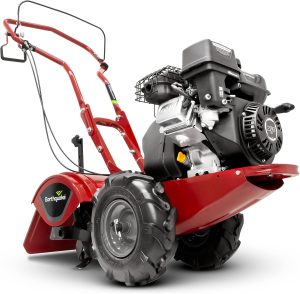
Earthquake Victory 39381 Rear-Tine Tiller
- 209cc four-cycle Viper engine
- Counter-rotating rear tines
- 16-inch tilling width; up to 10-inch depth
- Adjustable drag stake and Instant Reverse
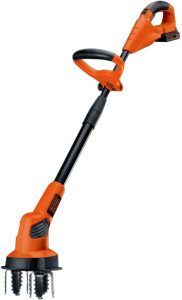
BLACK+DECKER LGC120 Garden Cultivator Kit
- 20V MAX cordless cultivator
- Counter-oscillating tines
- Adjustable handle and telescoping tube
- Battery and charger included; for established beds
The two machines serve different roles in a lawn and garden. The comparison below separates ground preparation from ongoing weeding rather than ranking a lightweight cultivator as a replacement for a full-size tiller.
1. Earthquake Victory 39381 Rear-Tine Tiller
Earthquake Victory 39381 Rear-Tine Tiller
- 209cc four-cycle Viper engine
- Counter-rotating rear tines
- 16-inch tilling width; up to 10-inch depth
- Adjustable drag stake and Instant Reverse
Earthquake specifies the Victory 39381 for tough clay, compacted soil and new ground. Its tines rotate opposite to the driven wheels, and the rear-tine layout provides a more suitable starting point for this task than a small handheld bed cultivator.
The 16-inch working width and advertised depth of up to 10 inches describe the machine’s capacity, not a promise that it will reach full depth on the first pass. The operator manual calls for shallow initial passes in hard or unbroken soil, increasing depth progressively as conditions permit.
An adjustable drag stake controls working depth and helps regulate forward movement. Instant Reverse assists maneuvering, but the operator still needs room, firm footing and control, especially near a fence or other obstacle. Clear large stones and foreign objects before starting.
This is a substantial gasoline machine with separate fuel and engine oil requirements. It needs outdoor operation, maintenance, storage space and a suitable way to transport it. Check the exact manual and supplied engine instructions rather than borrowing procedures from a two-stroke cultivator.
Strengths: A manufacturer-designated role in hard ground, counter-rotating tines and depth control. Limitations: Size, handling and engine upkeep. For an occasional project or ground you cannot control safely, renting suitable equipment or hiring help may make more sense.
Related: Disc plows for ATVs
2. BLACK+DECKER LGC120 Cordless Garden Cultivator
BLACK+DECKER LGC120 Garden Cultivator Kit
- 20V MAX cordless cultivator
- Counter-oscillating tines
- Adjustable handle and telescoping tube
- Battery and charger included; for established beds
The LGC120 is intended for cultivating garden beds, weeding and preparing small patches. Its paired counter-oscillating tines and upright format are useful for lighter maintenance. It should not be presented as the primary tool for opening untouched, densely compacted clay.
An adjustable handle and telescoping tube let the operator set the working position. These features can improve fit, but they do not guarantee fatigue-free use or effortless penetration of hard ground. Do not force it through material that overloads or clogs the tines.
The selected LGC120 kit includes a 20V MAX lithium-ion battery, charger and two tines. It is not the bare-tool LGC120B package. Use the compatible battery and supplied charging instructions; a vehicle-battery charger is not interchangeable with this tool’s charger.
Working area per charge varies with soil, depth and workload. A per-charge marketing figure is not a daily cultivation limit, and it should not be interpreted as a guarantee for dense clay. The manufacturer’s current page gives differing area figures, so this guide does not promise a fixed coverage.
The manual says not to cultivate wet soil. If the tines clog, release the trigger, let them stop and remove the battery before clearing the obstruction. Its protective clutch is not an adjustable control for forcing the tool into harder ground.
Strengths: Cordless operation and a compact format for established beds and light weeding. Limitations: Battery runtime and the load a small cultivator can handle. Choose the rear-tine option or another suitable ground-preparation method when the task is breaking a compacted plot.
Related: Garden plows and cultivators for lawn tractors
Best Tiller for Clay Soil: Buying Guide
Garden Size and Access
Measure the usable plot, gates and working space before comparing tillers. A wider machine can cover ground efficiently, but it may be awkward in narrow beds or around established plants. A small cultivator is easier to position for maintenance, provided the soil is already suitable for it.
Consider transport and storage as well as the area to be worked. For one difficult job, a rental machine chosen for the actual ground conditions may be more useful than owning an undersized tool.
Soil Moisture and Timing
Do not simply wait until clay is completely dry: baked clay can be extremely hard. At the other extreme, working waterlogged clay can damage its structure. The useful window is when the soil is workable and crumbles rather than smearing; follow each tool’s restrictions on wet conditions.
The RHS advice linked above explains why wet clay should not be worked or heavily walked on. Raised beds, organic matter and a no-dig approach can also form part of managing clay. Repeated powered cultivation is not the only way to create a usable garden.
Tines, Depth and Control
Engine displacement or advertised torque alone does not tell you how a machine will behave in your plot. Compare tine direction, driven wheels, drag-stake adjustment and the manufacturer’s intended use. Begin shallow and make controlled successive passes rather than forcing the machine to full depth.
The Victory manual specifically warns that hard ground can make a tiller jump or lurch. Learn its controls and operating procedure before use, and stop if you cannot maintain control. Keep bystanders clear and use the specified protective equipment.
Versatility, Maintenance and Support
Use only attachments approved for the exact machine. A cultivator, lawn aerator and sod cutter perform different jobs; having a gasoline engine or detachable parts does not make them interchangeable.
Plan for tine inspection, cleaning, engine or battery care and access to replacement parts. A warranty term is not evidence that a tool will last for generations. Check the applicable use conditions and service support before buying.
Our lawn-mower guide covers a different machine category; do not use mower instructions as a service manual for a tiller.
Related: Tow-behind aerator attachments
Choose for the Ground You Actually Have
For harder clay preparation, the Victory 39381 has a clearly documented rear-tine role. Keep the LGC120 for lighter cultivation and weeding once the bed is workable. Check moisture and access first, and consider rental or professional help if the ground or machine is beyond what you can manage.
Related: Brush cutters for a different land-clearing task