
When trees drop sticks across a lawn, start by gathering the larger branches by hand. A cart or tarp can make collection easier, but no lawn sweeper or leaf vacuum should be treated as a branch shredder. Choose any follow-up equipment according to the remaining debris, ground conditions and the machine’s instructions.
The six approaches below serve different jobs. Some move loose material into a pile; others collect leaves after the sticks have been removed. Separating those tasks is more useful than expecting one attachment to clear every kind of garden debris.
Easy Ways to Pick Up Sticks in a Yard: Six Approaches
1. Power Broom
A rotating brush can move light surface debris, but it does not collect material in a hopper. The GDAE10 GD-846 is a handheld, shaft-mounted gas power broom with a 52cc two-stroke engine and nylon bristles. It is not a wheeled walk-behind sweeper.
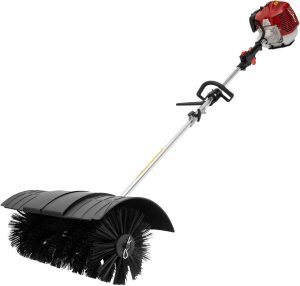
GDAE10 GD-846 Gas Power Broom
- Handheld, shaft-mounted rotating nylon brush
- 52cc two-stroke gasoline engine
- For suitable sweeping tasks; not a branch shredder
The seller describes light-debris sweeping on hard surfaces. Do not extend that into a promise that it will clear thick branches, stones or every lawn without damage. Remove bulky objects first and confirm that the supplied instructions permit the surface and task. A powered brush can throw debris; keep other people clear and use the specified protective equipment.
This is a separate equipment category from sulkies for walk-behind mowers. A mower accessory does not convert the handheld broom into a ride-on or wheeled machine.
2. A Leaf Vacuum for the Remaining Leaves
A yard vacuum must be matched to its permitted materials. For the handheld Toro 51619, the useful role here is leaf cleanup after you have removed sticks and other hard debris—not collecting rocks or driving over branches.
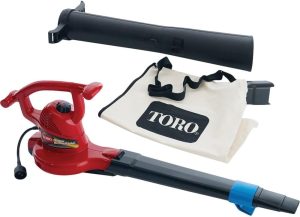
Toro 51619 Ultra Blower/Vacuum
- Corded electric blower and leaf vacuum
- Handheld design with collection bag
- Remove sticks and hard objects before vacuuming
Toro’s instructions say to vacuum only dry leaves and soft items. They warn that sticks, rocks, acorns and pine cones can damage the impeller. They also warn that small hard objects can be thrown through the collection bag. Keep the bag fitted, check it for wear and unplug the unit before clearing an obstruction.
The BLACK+DECKER BEBL7000 is another corded leaf blower/vacuum, with a backpack collection bag. Its POWERBOOST control is not permission to feed branches, rocks or other hard objects into the fan. Use it for the leaf-cleanup task described in its manual.
Neither model is a self-propelled lawn vacuum. Consider cord access, the load of the collection bag and how much leaf material remains before deciding whether either is useful for your yard.
3. A Pine Straw Rake Attachment
A tow-behind pine straw rake can gather pine needles, leaves and suitable light, loose debris into windrows. Spring tines are not designed to drag substantial branches, uproot shrubs or excavate stones.
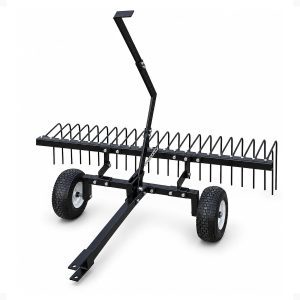
Yard Tuff YTF-60PSR Pine Straw Rake
- 60-inch tow-behind spring-tine rake
- For pine needles, leaves and suitable loose debris
- Check towing hitch compatibility; remove large branches first
The Yard Tuff YTF-60PSR provides a 60-inch working width. Check the towing vehicle and hitch against its instructions, and remove larger branches before starting. Raking moves material into a manageable pile; you still need to collect and dispose of it. Do not assume that every mower, ATV or utility vehicle is compatible merely because it can tow something.
4. A Landscape Rake Attachment
A landscape rake can move loose surface debris on suitable ground, but it may also disturb soil or turf. Choose the hitch type, tine spacing and intended use for the exact attachment; it is not automatically a lawn-safe replacement for a leaf rake.
Ground-engaging plows and tillers serve a different purpose. Do not add down-pressure or dig into a finished lawn simply to retrieve scattered sticks. For a modest amount of debris, a hand rake and separate branch collection may be more appropriate.
5. A Dethatcher Is for Thatch
A dethatcher removes accumulated thatch from grass. It is not a general-purpose branch collector, and using it over loose sticks can cause tangles or damage. Remove debris first and dethatch only when the lawn needs that treatment.
Likewise, a pull-behind disc is a soil-working implement, not a tool for sweeping sticks off an established lawn. Match the implement to its actual job rather than choosing it only because it can be towed.
6. A Lawn Sweeper for Grass and Leaves
Lawn sweepers use rotating brushes to move suitable loose material into a hopper. Pick up branches and hard objects first. A larger basket does not mean a sweeper can handle large sticks, rocks or tangled piles.
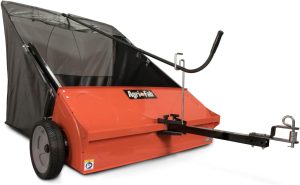
Agri-Fab 45-0492 Tow Lawn Sweeper
- 44-inch sweeping width
- Brush height adjustment and offset hitch
- For grass and leaves after larger debris is removed
The Agri-Fab 45-0492 is a 44-inch tow sweeper with adjustable brush height and an offset hitch. Its manual describes collecting appropriate amounts of grass and leaves and requires checking the towing vehicle’s loading capacity. Stop and inspect it if foreign material becomes caught in the brushes. Follow the manual’s speed and slope limits rather than treating towing speed as a way to force material through.
Confirm the actual hitch, towing and braking limits of your vehicle. A cargo carrier for a riding mower is a different accessory and does not establish sweeper compatibility.
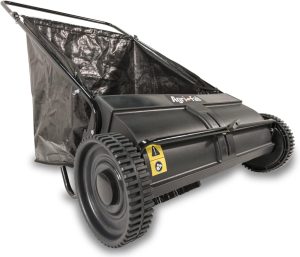
Agri-Fab 45-0218 Push Lawn Sweeper
- 26-inch sweeping width
- Manually pushed; no towing vehicle required
- Collection hopper for suitable lawn debris
The Agri-Fab 45-0218 is a 26-inch push sweeper with a collection hopper. It does not require a tractor, but you supply the pushing effort and must empty the bag. Brush-height adjustment helps match the grass; it does not make the machine suitable for all debris. Stop before removing anything tangled around the brushes.
How to Choose
Walk the area first and separate branches, stones and litter from loose leaves and grass. Then assess the surface, access, storage space and the equipment you can safely handle. Borrowing or renting a suitable tool can be useful when its permitted tasks match the job, but do not test an unsuitable attachment on debris it was not designed to handle.
Frequently Asked Questions
Can you mow over sticks?
Remove sticks, branches and other debris before mowing. Do not assume a small stick is harmless: the mower can throw debris or strike a hidden hard object. Follow the mower’s inspection and operating instructions.
Do lawn sweepers pick up sticks?
Lawn sweepers are primarily useful for suitable loose lawn debris such as leaves and grass clippings. Some may gather light twigs, but do not rely on them to collect branches or force oversized debris through the brushes. Remove larger sticks first and follow the exact sweeper manual.
Related: Equipment for removing rocks from a yard
Wrapping Up
Collect larger sticks first, then use a suitable rake, sweeper or leaf vacuum for the remaining task. Acorn cleanup also needs a tool matched to the material rather than an assumption that every vacuum or sweeper can handle it.
For other garden and home projects, keep equipment limits in mind. A homemade collection arrangement still needs to respect the towing vehicle and attachment instructions.
Video: an example of gathering sticks during a yard cleanup. It is not a model-specific operating guide for the equipment above.