
To make garden rows with a tractor, first decide whether you need a raised planting bed or an open furrow. A disc hiller moves soil into a mound; a middle buster or row-maker opens a channel. Choose the tool and spacing for the crop, prepared soil and tractor.
The two attachments below use different mounting arrangements. Check the hitch system, lift capacity, clearance and the tractor manufacturer’s limits before buying. Neither attachment is a universal fit for every lawn mower or tractor.
1. Disc Hiller and Garden Bedder
A pair of angled discs can move loosened soil toward the center to shape a raised row. Adjustments determine how the discs work with the soil; the toolbar width alone does not establish the finished bed width. Primary tillage and suitable soil conditions matter.
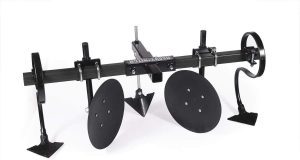
Heavy Hitch 48-Inch Garden Bedder with S-Tines and Row Maker
- 48-inch toolbar with adjustable 14-inch disc hillers
- Selected package includes S-tines and row-maker insert
- 2-inch receiver mounting arrangement
- Requires a compatible receiver on the tractor’s three-point hitch
The selected Heavy Hitch package includes the disc hillers, S-tines and row-maker insert. These perform different tasks: the discs shape the mound, the tines cultivate and the row-maker opens a planting furrow. Other packages omit some of these tools, so confirm the selected configuration.
Heavy Hitch specifies a 2-inch receiver connected to a Category 1 three-point hitch for this attachment. The implement then raises and lowers with the hitch. The included toolbar receiver insert does not mean that a suitable tractor-mounted receiver or complete three-point hitch is included.
Set the spacing and depth to suit the crop and the tractor’s clearance. Follow the manufacturer’s assembly and operating instructions; do not assume an improvised adapter makes a different hitch category suitable.
Video: an example of a homemade garden bedder. It does not demonstrate the Heavy Hitch package above or establish that a homemade attachment will fit your tractor.
2. Middle Buster or Furrower
A middle buster is a different choice when the goal is a furrow rather than a raised bed. It needs soil and operating conditions appropriate to the implement. Do not assume that every tool sold under this name has the same blade shape or mounting category.
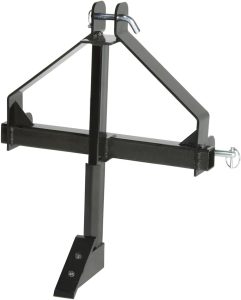
MotoAlliance IMPACT IP6006 Cat-0 Middle Buster
- Category-0 three-point attachment
- Rigid shank and replaceable cutting edge
- For compatible tractors and permitted soil work
- Verify Cat-0 hitch dimensions and tractor limits
The IMPACT IP6006 shown here uses Category-0 mounting pins. Its manufacturer’s assembly drawing shows a narrow cutting edge, not the broad double-wing blade found on some other middle busters. Match the actual tool to the furrow you want to create.
A Category-0 attachment is not automatically interchangeable with Category 1. Check the complete hitch geometry and the tractor’s capability before purchasing. Working depth is limited by the equipment and soil conditions; it is not simply as deep as the crop might require.
Some purpose-designed plows can also lift potatoes, but that does not make every furrower a suitable harvester for all root vegetables. Use the attachment only for the applications described by its manufacturer.
3. Combined Gardening Attachments
A combination toolbar can carry discs, cultivator tines and a row-maker, as in the Heavy Hitch package above. This can reduce attachment changes, but each component still needs the correct setting. It does not guarantee that unprepared or compacted ground becomes a finished seedbed in one pass.
The manufacturer’s guide to disc bedders, cultivators and row-makers explains their separate roles. Compare the complete package and the mounting system rather than the number of attachments pictured.
How to Lay Out and Form the Rows
- Plan row spacing from the crop’s planting guidance and the space needed for later cultivation. Allow for tractor width and access at the ends.
- Prepare the soil as required for the chosen implement. Inspect the route and remove obstructions before starting.
- Attach and adjust the implement using its instructions and the tractor manual. Check hitch clearance and operating limits.
- Mark the first row or use a suitable alignment reference. Make a short test pass at the prescribed operating speed.
- Inspect the furrow or bed, then adjust the implement as instructed. Higher speed is not a universal way to make a taller or better bed.
- Keep the chosen spacing and working depth consistent. Raise or handle the implement during turns as its manual directs.
Choose for Your Tractor, Soil and Budget
For raised beds, compare disc-hiller arrangements. For furrows, compare the exact blade and mounting design. A used or rented attachment can be an option, but inspect wear, missing parts and compatibility as carefully as for a new purchase.
Power rating alone does not establish compatibility. Confirm the hitch category, receiver arrangement, lift capacity, clearances and any required ballast with the equipment manufacturers. Do not rely on unapproved modifications to make an unsuitable tool fit.
For a different soil-care task, see our guide to aerator attachments; an aerator is not a substitute for a garden row-maker.
Related: Ride-on mowers for uneven ground
Related: Equipment for removing rocks from a yard
Final Check Before Planting
Inspect the finished row and verify the crop’s planting depth separately from the implement’s working depth. Good row preparation starts with a suitable attachment and consistent setup, not a promise of a record harvest.
Related: Notched and smooth disc blades