Removing cured thinset from a concrete floor usually means controlled scraping, chiseling or grinding. The aim is to remove the mortar while preserving the slab and achieving the surface required by the next flooring system. More impact or a more aggressive cutter can also remove concrete you intended to keep.
This guide concerns concrete slabs. Wood subfloors, waterproofing membranes and other assemblies need their own removal and repair method. Start with a small test area and identify the substrate before choosing a machine.
Tools to Remove Thinset from Concrete
1. A Suitable Hammer and an SDS-Max Floor Scraper
A rotary or demolition hammer with a hammer-only mode and a compatible scraper can chip thinset away. An ordinary drill/driver or percussion hammer drill is not the same thing: the tool must support the required non-rotating chiseling operation.
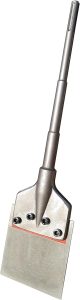
Thinset Removal Bit 6TRBSMSF SDS-Max Floor Scraper
- 6-inch replaceable scraping blade
- SDS-Max shank
- Assembly for a compatible rotary or demolition hammer
- Hammer is purchased separately
The 6TRBSMSF is the scraper assembly, not a complete powered tool. Its wide replaceable blade is intended for thinset and tile removal. Inspect and tighten its fasteners as directed and replace a worn blade before it damages the assembly.
It requires an SDS-Max-compatible hammer. It does not fit the SDS-plus Bosch 11255VSR or the 1-1/8-inch hex XtremepowerUS hammer discussed elsewhere on this site. Match the hammer, accessory and operating mode before buying; our rotary-hammer guide explains the tool category.
2. A Hand Scraper for Small Cleanup Tasks

Hyde 06108 Flexible Stainless Putty Knife
- 1-1/2-inch flexible stainless blade
- Small hand tool for applying and scraping compounds
- For light cleanup rather than breaking hardened mortar
The Hyde 06108 is a flexible putty knife. It can help gather loose residue or handle light scraping, but it is not the main tool for breaking a bonded layer of cured thinset. A stiff floor scraper or an appropriate powered setup may be needed when the material does not lift readily.
Do not expect boiling water or vinegar to turn cured cement-based mortar into easily removable paste. Select any chemical treatment only when its manufacturer approves the material, substrate and subsequent flooring installation. Keep water and liquid treatments away from electrical equipment unless the system is designed for them.
3. A Power Chisel Intended for Masonry
Choose a masonry-rated chiseling tool and accessory for concrete-floor work. Small carving tools for wood or plaster are a different category and should not be selected simply because their names include “power chisel.” Check material suitability and depth control rather than choosing by motor speed alone.
4. An Air Hammer for Limited Chipping
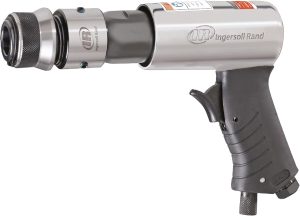
Ingersoll Rand 114GQC Air Hammer
- Standard-duty air hammer with quick-change retainer
- 3,500 blows per minute
- Manufacturer-rated 20 CFM air consumption at load
- Requires a suitable compressor, hose and chisel
The 114GQC is a standard-duty air hammer supplied with a three-piece chisel set. It may suit localized chipping with an appropriate approved accessory, but its general repair role does not establish that it will efficiently strip an entire floor. Check the chisel and application with the manufacturer if the required scraper is not included.
Ingersoll Rand specifies 90 PSI working pressure, a minimum 3/8-inch hose and 20 CFM consumption at load. A small compressor’s tank capacity alone cannot meet that sustained demand. Compare delivered air at the required pressure using our compressor airflow guide.
5. A Demolition Hammer for Coarser Removal
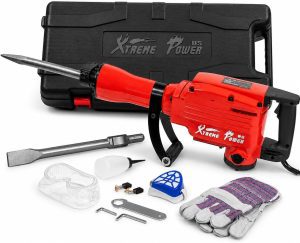
XtremepowerUS 61108-XP Demolition Hammer
- Corded demolition hammer
- 1-1/8-inch hex tool holder
- Point and flat chisels included
- Coarse breaking requires careful slab protection
This electric breaker can handle heavier chipping within its stated demolition applications. It is a coarser choice than a purpose-matched floor scraper and can gouge the slab. Use the least aggressive suitable setup and test its effect before committing to a large area.
The included flat chisel is not the six-inch SDS-Max scraper above, and that scraper cannot be installed in this hex holder. Confirm the exact compatible accessory for the work. Our demolition-hammer guide covers this tool class.
A breaker’s separate use in rocky fence-post work does not mean that maximum force is desirable on an interior slab. If the project began with a shower problem, our guide to shower leaks discusses diagnosis before deciding how much tile to remove.
6. A Concrete Grinding System for Residual Ridges
Grinding can level residual mortar after the bulk has been removed. Select a grinder, concrete-rated grinding accessory and dust-control system that are approved to work together. Diameter, spindle fitting, speed rating, guard and dust-shroud fit all matter.
A grinder supplied with a metal-grinding wheel is not a complete concrete-floor grinding kit. Do not assume that any diamond cup fits any angle grinder, or that a wire brush will remove hardened thinset without damaging the slab. A suitable rental surface-grinding system may be a better choice for a large floor.
7. A Scarifier for Aggressive Outdoor Surface Preparation
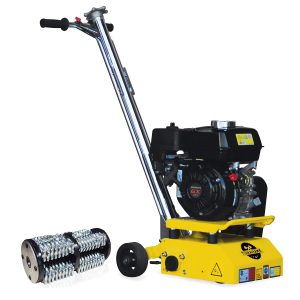
Tomahawk TSCAR-8H Concrete Scarifier with Drum Kit
- 8-inch scarifying path
- Honda GX160 gasoline engine
- Selected package includes a cutter drum
- Outdoor use; aggressive surface removal
The selected TSCAR-8H package is a gas-powered scarifier with a drum kit. Its cutters remove surface material aggressively, so it can alter the concrete profile as well as remove coatings or mortar. It is a specialist option when that degree of surface removal fits the job, not a gentle finishing tool.
The gasoline engine makes this an outdoor option. Do not run it inside a house, garage, basement or other enclosed area, even with doors open. For indoor work, select suitable electric equipment and a complete dust-control arrangement instead.
A dust port alone does not capture hazardous fine dust, and a simple collection bag is not the same as a suitable dust extractor. Match the machine, extraction system and operating procedure to the material and work area.
8. Floor Maintainers Need the Right Attachment
A floor buffer or maintainer is not automatically a thinset-removal machine. Only use a removal attachment and setup approved for that machine and surface. Ask the rental supplier about the mortar, floor area, edge work, extraction and required finish before choosing equipment.
Useful Tips Before Starting
The video below compares an air hammer and a demolition hammer for DIY tile and thinset removal. Compare its tool, accessory and dust-control arrangement with your own equipment; a demonstration does not make different shanks or machines interchangeable.
- Test a small area and stop if the tool is digging into the structural slab or damaging an assembly you need to retain.
- Control dust at the source with a suitable shroud or extraction arrangement. Concrete and mortar dust can contain respirable crystalline silica; an ordinary nuisance dust mask is not a substitute for appropriate controls and respiratory protection.
- Use the eye, hearing and other protection specified by the equipment and material instructions. Avoid dry sweeping or blowing settled fine dust around the room.
- Disconnect power or the air supply before changing accessories. Check fasteners, guards, hoses and electrical leads before work.
- Follow the new flooring manufacturer’s substrate preparation requirements after removal. A surface that looks clean may still require repair or further preparation.
Choose the method by the mortar thickness, concrete condition and required finish. A compatible scraper or controlled chisel can remove bulk material; a properly equipped grinder can address remaining ridges. Use aggressive breakers and scarifiers only when the job warrants their effect on the slab.